
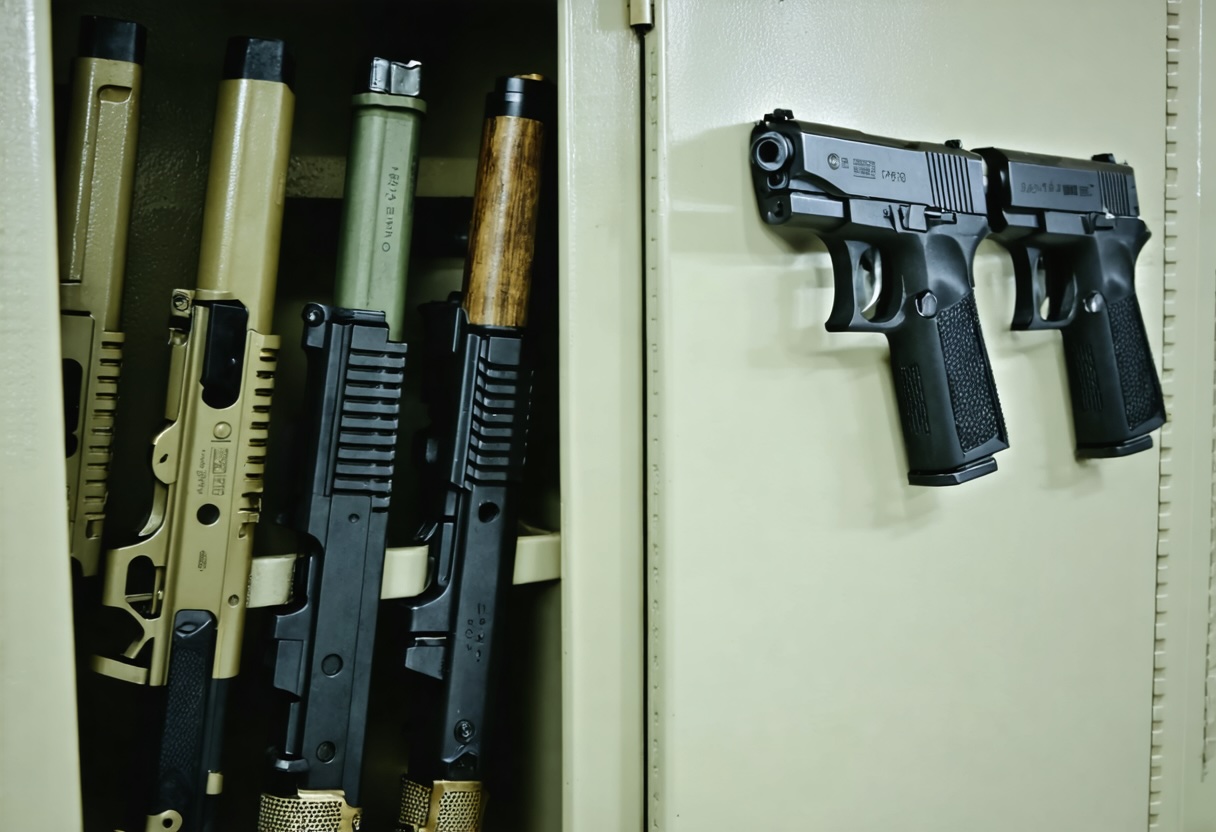
This week’s top three summaries: R v Paddy, 2026 SKCA 27: #prejudice v probative, R v ML, 2026 ONCA 339: #principled exp’n, R v DP, 2026 NSCA 34: #reasons on credibility
R v Paddy, 2026 SKCA 27
[February 20, 2026] Conduct outside Indictment Period: Prejudicial Value [Reasons by Jeffrey D. Kalmakoff J.A. with Jillyne M. Drennan and Naheed Bardai JJ.A. concurring]
AUTHOR’S NOTE: Conduct that is the same as, or substantially similar to, the alleged offending behaviour but falls outside the indictment period constitutes extrinsic misconduct evidence carrying a significant risk of propensity reasoning. Its prejudicial force lies in the possibility that a jury will reason impermissibly: because the accused engaged in similar conduct on another occasion, she is the sort of person likely to have committed the charged offence.
At the same time, evidence of similar conduct may possess legitimate probative value. Depending on the issues at trial, it may be relevant to matters such as intent, knowledge, or context. That potential relevance, however, can obscure the need to treat the evidence as presumptively dangerous and subject to strict controls.
Here, neither counsel nor the trial judge appears to have appreciated the need to limit the use of a recorded phone call between the accused and her common-law partner in which she discussed a number of prejudicial matters, including firearm possession. The risk of misuse was acute because the accused was later charged with possessing firearms discovered in a storage locker, rendering the statements closely analogous to the alleged offending conduct.
Because the evidence amounted to extrinsic misconduct evidence, its admission required careful scrutiny through an admissibility voir dire balancing probative value against prejudicial effect. If admitted, the jury required a clear limiting instruction directing that the evidence could not be used to infer bad character or a disposition to commit the charged offence, but only for its permissible purpose, if any.
Those safeguards were absent. As a result, the jury was left free to engage in prohibited propensity reasoning, and a new trial was ordered.
I. INTRODUCTION
[1] After a trial in the Court of King’s Bench, a jury found Corey Paddy guilty of six Criminal Code offences: possessing a firearm without a licence (s. 92(1)); possessing a prohibited weapon without a licence (s. 92(2)); possessing a firearm while prohibited (s. 117.01(1)); possessing ammunition while prohibited (s. 117.01(1)); and two counts of possessing a firearm for the purpose of transferring it (s. 100(2)). The offences were all alleged to have been committed between March 23, 2020, and April 20, 2020.
[2] The Crown’s case against Ms. Paddy was circumstantial in nature, relying on evidence that it said tied her to firearms and ammunition that were found in the vehicle and home of her romantic partner, Brett Karol, and in a storage locker Mr. Karol had rented. In that regard, the evidence included statements Ms. Paddy had made to Mr. Karol during a recorded telephone conversation approximately eight weeks before the police seized the firearms and ammunition from him, as well as video footage that depicted Ms. Paddy assisting Mr. Karol in moving various items into and out of the storage locker.
[3] Ms. Paddy appeals against the convictions. She alleges that the trial judge erred by admitting the contents of the recorded conversation into evidence and by failing to properly instruct the jury with respect to the use it could make of that evidence.
[13] As part of their investigation, the police obtained judicial authorization to seize recordings of phone calls made between Ms. Paddy and Mr. Karol while Mr. Karol was in custody at the Saskatoon Provincial Correctional Centre. The recordings of those phone calls were admitted into evidence, by consent, at the outset of the trial. One of the calls occurred on February 4, 2020, and contained the following exchange:
Ms. Paddy: Well um yeah no I have all your stuff and shit and then, except for one strap and because I don’t know how Bobby fucking got it from me but
Mr. Karol: Oh he did get one?
Ms. Paddy: he got it.
Mr. Karol: Which one, you don’t know?
Ms. Paddy: I’m not sure but I’m gonna go back and get it.
…
Ms. Paddy: And I don’t even know how many are there but I yeah, I have them all and everything else of yours.
Mr. Karol: You got the one in the guitar bag though hey?
Ms. Paddy: Oh yeah for sure.
Mr. Karol: Okay good, that’s my favorite.
…
Ms. Paddy: … So fucking um yeah apparently I’m wanted for fucking trafficking guns and uh
Mr. Karol: Shut up
Ms. Paddy: apparently me and your truck have been wanted or, or have been involved in some assaults, fuck no bitch.
…
Mr. Karol: … Um there, there was still that one in that backpack in the truck you know hey?
Ms. Paddy: No, yeah I know I grabbed that, don’t worry.
Mr. Karol: Okay good, good.
Ms. Paddy: Don’t worry all your stuff is took care of.
Mr. Karol: Just want to make sure (inaudible …) but
Ms. Paddy: Yeah I know, no fucking um yeah no I put that one in my bag when, when, when that (inaudible) was there and then,
Mr. Karol: Yeah.
Ms. Paddy: and shit and I paid Tyler for those (inaudible).
…
Ms. Paddy: Well yeah no fucking um, yeah I have them but I just fucking, I don’t know I kind of feel like I’m heated out though and maybe, I don’t know, I’m tripping, maybe (inaudible …) and they’ll come fucking, I don’t know so, so, so I rented a fucking storage thing today and
Mr. Karol: Oh did you?
Ms. Paddy: I’m going to move them in there. Yeah.
Mr. Karol: Really? (laughs)
Ms. Paddy: Well fuck man like I’m fuck I
Mr. Karol: Yeah no it’s
Ms. Paddy: like it never fails, I’m always under investigation for fucking trafficking guns like.
Mr. Karol: Shit are you? Yeah it’s probably a good idea.
Ms. Paddy: It’s so fucking dumb man but yeah so I’ll move those in there
[14] In the Agreed Statement of Facts, the parties agreed that the word “strap”, as used by Ms. Paddy in the February 4 call, was a slang reference to a firearm. During the February 4 call, Ms. Paddy also discussed using crystal methamphetamine and joked that she had contemplated committing robberies to raise bail money for Mr. Karol.
B. Counsel’s closing arguments
[19] In his closing address to the jury, Crown counsel argued that Ms. Paddy was guilty of the charges against her, in that she had the firearms and ammunition at issue in her possession during the relevant time frame either actually, constructively, or jointly with Mr. Karol. Crown counsel argued that the evidence as a whole proved Ms. Paddy knew what the items found in Mr. Karol’s ehicle, home and the storage lockers were and that she had a measure of control over them. In support of that argument, Crown counsel pointed to the portions of the video surveillance evidence from the Britebox storage facility in which Ms. Paddy appeared to be transporting a blanket and a trolley that Mr. Karol used moments later when moving the gun safe into Unit J126, portions where she appeared to be looking through the boxes that were being moved into the storage locker, and portions where she was observed carrying a large metal crate that was later found to contain firearms parts and ammunition.
[21] The Crown argued that the contents of the February 4 call, coupled with what could be observed of Ms. Paddy’s actions and dealings with the items being moved into and out of the storage units on the surveillance video footage from March 23, 26 and 27 and her remarks in the phone calls from April 19 and April 20, when considered cumulatively, all pointed to only one conclusion: that she had knowledge and control of the firearms and ammunition seized by the police and an intention to facilitate their transfer.
[22] Ms. Paddy argued that the evidence against her was all circumstantial and that it did not prove that she knew about the presence of the firearms, or that she had any measure of control over them or an intention to transfer them, during the time frame specified in the indictment. She asserted that all of the evidence pointed to the fact that Mr. Karol had “full and total control over the places where the guns were found”. She noted that much of what could be observed of her on the surveillance videos showed her moving only mundane household items and furnishings, and that nothing depicted her moving any visible weapons or ammunition or demonstrated her awareness of the contents of the containers where the firearms or ammunition were ultimately located. She also argued that the passage of time between when she was last observed on the surveillance video and when the police searched Unit J126, coupled with the fact that Mr. Karol had made several solo trips to the locker during that interval, permitted a reasonable inference that he had placed the firearms in the storage locker without her knowledge after her last attendance.
[28] ….In his opening remarks, the trial judge had given only the following instruction about the use of evide.
Sometimes certain evidence can only be used for a specific purpose. If that happens, I will tell you how you may use the particular evidence in deciding this case. You must consider that evidence only for the purpose I describe, and you must not use it for any other purpose.
[29] In his final charge, the trial judge instructed the jury as follows in relation to the recorded conversations:
In this case, there is evidence that Corey Paddy said things to Brett Karol in the telephone conversations that were recorded from the Saskatoon Provincial Correctional Centre. Some of that — some of these telephone conversations may amount to what is described as after the fact conduct. It is the Crown’s position that certain of the comments made by Ms. Paddy were incriminating. There is no dispute that Ms. Paddy engaged in these telephone conversations.
[33] ….Neither the Crown nor Ms. Paddy objected to the trial judge’s final instructions, and neither party requested that he elaborate further or provide a limiting instruction with respect to the use of the recorded conversations.
III. ANALYSIS
A. The arguments
[38] Ms. Paddy’s second argument is that the trial judge erred by failing to provide the jury with a limiting instruction in relation to the February 4 call. Under this branch of her submissions, Ms. Paddy contends that, even if the February 4 call was properly admitted, the judge ought to have provided the jury with specific instruction identifying the permissible use of that evidence and, more importantly, informing the jury what it could not be used for. She says the judge’s failure to provide such an instruction left the jury improperly equipped to decide the necessary issues.
[39] As I will discuss, it is unnecessary to address Ms. Paddy’s first argument. This is because, even accepting that the February 4 call was properly admitted, the circumstances called for a limiting instruction concerning its use, which the trial judge did not provide. The omission of such an instruction was an error in law that requires this Court to intervene.
IV. ANALYSIS
A. The February 4 call was evidence of extrinsic misconduct
[41] Evidence of an accused person’s misconduct beyond what is alleged in the indictment – whether it is termed as extrinsic misconduct evidence, past discreditable conduct evidence, or similar fact evidence – is presumptively inadmissible. This type of evidence risks triggering impermissible general propensity inferences and gives rise to a danger that a trier of fact may assume, from the acceptance of such evidence, that the accused is a bad person who is more likely to have committed the offence with which they are charged (R v T.J.F., 2024 SCC 38 at para 76; R v Handy, 2002 SCC 56 at para 36; see also: R v Hussein, 2026 SCC 2 at paras 34-35). Such evidence is inadmissible if it does no more than show that the accused is the type of person likely to have committed the offence or if it is tendered to establish the accused’s bad character as circumstantial proof of their conduct in relation to the present charges (Handy at para 31). While extrinsic misconduct evidence is presumptively inadmissible, it is not categorically so. It may be admitted if it is relevant, material to a live issue in the case other than propensity, and the Crown establishes, on a balance of probabilities, that its probative value outweighs its prejudicial effect (Handy at paras 41, 55 and 69-73).
[42] The admissibility of evidence of extrinsic misconduct will generally turn on its degree of connectedness to a properly defined issue other than propensity. Evidence that is directly relevant to the Crown’s theory of the case will generally be admissible even though it may demonstrate bad character on the part of the accused, as long as its probative value exceeds its prejudicial effect (R v G.(S.G.), 1997 CanLII 311 at para 65, [1997] 2 SCR 716 (SCC); see also: R v Woods, 2019 SKCA 84 at para 96).
[43] ….By consenting to the entry of the February 4 call into evidence, and through the admissions she made in the Agreed Statement of Facts, Ms. Paddy can be taken as having conceded that the February 4 call was admissible on that basis.
[44] Where evidence of past discreditable conduct or other extrinsic misconduct is admitted in a jury trial, it ordinarily requires the trial judge to caution the jury against using the evidence for an improper purpose in its deliberations (G.(S.G.) at para 65; see also: R v Meeko, 2025 NUCA 12 at para 34; R v Bush, 2024 ONCA 469 at para 28; R v Van Dyke, 2014 BCCA 3 at para 17; and R v Ball, 2019 BCCA 32 at para 91). This is to ensure that a jury is not improperly influenced by “evidence that might lead them to have a general unease or distaste for a defendant or to form an impression about the propensities of the defendant” (R v Duncan, 2024 ABCA 237 at para 24). The rationale for this general rule was succinctly stated as follows in R v Dion, 2025 ONCA 7:
[59] The law is designed to prevent the general bad character of an accused person from being relied upon to assist in their conviction, because individuals are to be convicted of crimes based solely on case specific evidence that proves their guilt of the specifically alleged offence beyond a reasonable doubt, not because of the kind of person that they are. “[T]he Crown is not entitled to ease its burden by stigmatizing the accused as a bad person”: R. v. Handy, 2002 SCC 56, [2002] 2 S.C.R. 908, at para. 72. Triers of fact are therefore positively prohibited from reasoning “that the accused has the propensity or disposition to do the type of acts charged and is therefore guilty of the offence”: Handy, at para. 31; R. v. Arp, [1998] 3 S.C.R. 339, at para. 80. This is a strictly “prohibited inference”.
[60] If, in a jury trial, otherwise admissible Crown evidence shows the bad general disposition or bad character of the accused, the trial judge is required to direct the jury in a way that will prevent the “moral prejudice” that may be caused by this impermissible reasoning. Such a direction will ordinarily include both an affirmative direction on the appropriate, permissible use for which the evidence was admitted (R. v. Rulli (1999), 120 O.A.C. 357 (C.A.), at para. 15, leave to appeal refused, [1999] S.C.C.A. No. 284), and a negative direction or “limiting instruction” directing jurors to avoid relying on the prohibited inference: R. v. B.(F.F.), [1993] 1 S.C.R. 697 at p. 734.
[45] The trial judge’s instructions in Ms. Paddy’s case contained no explicit direction to the jury – affirmative or negative – concerning the proper use of the February 4 call. While the trial judge mentioned, at one point, that the February 4 call may assist the jury in establishing Ms. Paddy’s knowledge and state of mind, he said nothing whatsoever about the prohibited uses of that evidence. Ms. Paddy contends that the absence of such an instruction was a reversible error. The Crown argues that a limiting instruction was unnecessary given the issues at play and that if the judge had provided such an instruction, it would have prejudiced Ms. Paddy and potentially confused the jury. As I will discuss below, I agree with Ms. Paddy’s position.
B. A limiting instruction in relation to the February 4 call was required
1. Appellate review of jury instructions – the governing principles
[47] When reviewing jury instructions for legal error, appellate courts are to adopt a functional approach, in which “the central consideration is whether the substance of the instructions, when read in their entirety and considered in the context of the trial as a whole, properly equipped the jury to decide the case according to the law and the evidence” (R v B.F., 2025 SCC 41 at para 35; see also: R v Lozada, 2024 SCC 18 at para 14; and R v Abdullahi, 2023 SCC 19 at paras 34-35 and 40). Perfect instruction is not required, but a jury must be “accurately and sufficiently instructed” (B.F. at para 38, citing R v Jacquard, 1997 CanLII 374 at paras 2 and 32, [1997] 1 SCR 314 (SCC); Abdullahi at paras 35, 37 and 58). A jury charge must be taken as a whole, and a deficiency in one area may be compensated for by an accurate statement elsewhere in the charge. A jury charge will be sufficient as long as it can be said, at the end of the day, that the jury would have accurately understood the law it must apply (Abdullahi at para 41; R v Goforth, 2022 SCC 25 at paras 35 and 40; see also: Lozada at para 14; and Jacquard at para 32). However, where a judge’s charge fails to properly instruct the jury on a crucial point of law or leaves the jury with an inaccurate understanding of the law, it cannot be said to have adequately equipped the jury to carry out its task (Abdullahi at paras 32 and 38-43).
[49] A limiting instruction cautioning the jury against using the evidence for a prohibited purpose falls into the category of contingent instructions As a general rule, an instruction advising jurors against the prohibition on propensity reasoning will usually be necessary where evidence of extrinsic misconduct is led, but the failure to provide such an instruction does not invariably amount to a reversible error. In some cases, a limiting instruction may not be needed (R v Calnen, 2019 SCC 6 at paras 16-18, 32, 38-43, 61-67; see also: Dion at paras 65-68; Meeko at para 34; R v Boice, 2025 ABCA 252 at paras 28-31; Van Dyke at paras 17-30; R v Merz, 1999 CanLII 1647 at para 59, 140 CCC (3d) 259 (ONCA), leave to appeal to SCC refused [2000] SCR xi ; R v Salah, 2015 ONCA 23 at paras 83-86; R v Thibeault, 2018 ONCA 876 at para 12; R v Downey, 2022 NSCA 59 at paras 77-80; and R v Cook, 2013 ONCA 467 at paras 22-26). The operative consideration is whether the jury is likely to make improper use of the extrinsic misconduct evidence absent a limiting instruction. Where there is a real risk that a jury will support a finding of guilt through prohibited propensity reasoning, a limiting instruction must be provided (Meeko at para 48, citing R v M.R.S., 2020 ONCA 667 at para 69; see also R v Bomberry, 2010 ONCA 542 at para 34; R v Amin, 2024 ONCA 237 at para 69; and R v B.B., 2024 ONCA 766 at para 24).
[51] A factor that may be seen as bearing on the risk that a jury would improperly use extrinsic misconduct evidence in the absence of a limiting instruction is the extent to which the necessary message concerning the proper use of evidence has been conveyed by the instructions as a whole. Several decisions have held that the absence of an explicit instruction against propensity reasoning will not constitute a reversible error where the jury is properly instructed to that effect in some other way (see: Woods at paras 105-106; Meeko at para 39; Cook at paras 23-26; Salah at paras 88-89; and R v Sultan, 2024 ABCA 420 at paras 34-38).
[52] Another significant factor in this assessment is the position taken by counsel at trial. The position of counsel is not determinative of the issue, as the responsibility for the adequacy of the charge ultimately lies with the trial judge. However, where counsel fails to request a particular instruction or fails to raise an objection to the charge as delivered, that “may reinforce the conclusion that such an instruction was not required in the circumstances of the case” (Abdullahi at para 68, citing Calnen at para 41). An important consideration in the analysis is whether the silence of counsel at trial was tactical in nature,….
[53] At bottom, the focus of the inquiry is whether, in all the circumstances, the absence of a limiting instruction gave rise to a real risk of prejudice, in the sense that the jury was apt to misuse the extrinsic misconduct evidence (R.M. at para 20).
2. Applying the principles
[54] The extrinsic misconduct evidence at issue in this case was not extensive, but it was prejudicial in nature. In addition to discussing her involvement with firearms and moving items for Mr. Karol in the February 4 call, Ms. Paddy also discussed using crystal methamphetamine, stated that she was suspected of having committed assaults, joked about committing robberies to raise bail money for Mr. Karol, and complained about always being “under investigation for fucking trafficking guns”. In other words, in addition to things she said that were relevant to her alleged involvement in the crimes with which she was charged, Ms. Paddy discussed other matters that painted her in a negative light by suggesting that she was involved in, or was willing to be involved in, other criminal activity. That evidence was clearly capable of giving rise to improper propensity reasoning on the part of the jury.
[55] Some of the extrinsic misconduct evidence contained in the February 4 call was directly relevant to live issues in the trial, namely Ms. Paddy’s knowledge and intent with respect to the firearms at issue. However, other portions – her reference to taking illegal drugs, being suspected of assaults, being under investigation for firearms trafficking and purporting to be willing to commit robberies to raise bail money for Mr. Karol – could support no proper inference and, in the absence of a limiting instruction, there was a significant danger of moral prejudice….
[57] ….First, the fact that extrinsic misconduct evidence is relevant to establishing motive does not invariably or categorically remove the need for a limiting instruction (see: R v Bhullar, 2011 BCCA 395 at paras 18-24). Second, unlike a number of cases where the absence of a limiting instruction was not found to be an error, the extrinsic misconduct evidence at issue in this case – the February 4 call – did not demonstrate a specific motive for committing the crimes with which Ms. Paddy was charged; it spoke to the knowledge and intent elements of the offences.
[58] Additionally, and significantly, there was also a gap in time – more than six weeks – between the February 4 call and March 23, 2020, the earliest offence date set out in the indictment. The trial judge gave the jury no guidance about that gap, about why it may have been significant in the overall picture, or about how it played into the proper use to be made of the February 4 call by the jury. In fact, the judge gave no instruction at all with respect to the extrinsic misconduct evidence apart from summarizing the Crown and defence theories and stating, in a general way, that the February 4 call may assist the jury in determining whether the Crown had proven its case against Ms. Paddy. Moreover, the judge misidentified the nature of the extrinsic misconduct evidence by referring to it as after-the-fact conduct evidence and, after identifying it in that way, he gave the jury no instruction with respect to the proper use of after-the-fact evidence.
[59] Considering all of that, in my view, there was a legitimate risk that the things Ms. Paddy discussed in the call would invoke propensity reasoning on the part of the jurors and cause them to infer that she was guilty of the offences with which she was charged because she was the type of person who engaged in criminal activity. To counter the risk of propensity reasoning, the trial judge could have crafted a limiting instruction that would not have confused the jurors or prejudiced Ms. Paddy, along the following lines:
You may only use the statements Ms. Paddy made in the February 4 call to conclude or to help you conclude that she is guilty of the offences charged if you find those statements to be evidence of her knowledge, control, and intention with respect to the firearms or ammunition identified in the indictment during the time frame set out in the indictment.
You must not use the statements Ms. Paddy made in the February 4 call to conclude or to help you conclude that she is a person of general bad character or disposition who is more likely to have committed the offences charged because of that bad character or disposition.[Emphasis by PJM]
[60] I acknowledge that Ms. Paddy did not invite the trial judge to provide a limiting instruction with respect to the extrinsic misconduct evidence or raise an objection to the charge when such an instruction was not provided. However, I do not see that as fatal to her appeal. There is nothing in the record to suggest that her reason for not seeking such an instruction was deliberate or tactical in nature or that there was any benefit to her in not having a limiting instruction. In the circumstances, the risk that the jury would engage in prohibited propensity reasoning was strong,….
[61] ….The extrinsic misconduct evidence contained in the February 4 call opened the door to improper moral prejudice reasoning and, without a limiting instruction, the jury would not have understood that such reasoning is impermissible. Considering the whole of the record, the absence of a limiting instruction created a real risk that Ms. Paddy was prejudiced by the jury’s misuse of the extrinsic misconduct evidence. The convictions must, therefore, be set aside.
V. CONCLUSION
[62] For the foregoing reasons, I would allow the appeal, set aside the convictions, and order a new trial.
R v ML, 2026 ONCA 339
[May 12, 2026] Principled Exception to Hearsay: Evidence of Young Children [Reasons by Dawe J.A. with BW Miller and DA Wilson JJ.A. concurring]
AUTHOR’S NOTE: Statements made by young children may be admitted under the principled exception to the hearsay rule, particularly where necessity is established and threshold reliability can be sufficiently demonstrated. This case illustrates the difficulties that arise when such evidence is unsupported by independent corroborative evidence and emerges through informal, unrecorded questioning.
Here, the child’s statement was made to her mother and was never repeated in a formal forensic interview conducted by a trained child interviewer. Instead, the disclosure arose in the course of questioning by the mother, creating a heightened concern about suggestion and contamination. The leading questions recalled by the mother in testimony, however well intentioned, increased the risk that the child’s responses reflected maternal prompting rather than independent memory.
In those circumstances, the trial judge was required to conduct a careful threshold reliability analysis under the principled exception, directed at the particular hearsay dangers raised by the evidence. That analysis required attention not only to sincerity and memory concerns, but also to the risk of miscommunication. In particular, the judge failed to grapple with the possibility that the mother misinterpreted the child’s non-verbal gestures or that the child acquiesced to suggestions and made statements that were not true.
By failing to advert to these specific hearsay dangers, the trial judge did not properly assess whether the circumstances sufficiently substituted for contemporaneous cross-examination. The threshold reliability analysis was therefore incomplete, and a new trial was ordered.
I. OVERVIEW
[1] The appellant, M.L., was charged with two counts of sexual interference.2 The first charge, Count 2, related to his older now-adult daughter, S.L., who testified at trial that the appellant had sexually abused her years earlier, when she was between five and eight years old.
[3] The evidence on Count 4 consisted of A.J.’s mother’s testimony about a statement she said her daughter made to her in 2018, when her daughter was three years old. The trial judge ruled that A.J.’s hearsay statement to her mother was admissible for its truth under the principled exception to the hearsay rule.
[5] The appellant appeals his conviction on Count 2. His main ground of appeal is that the trial judge erred by finding that A.J.’s hearsay statement met the requirement of threshold reliability under the principled exception. Although A.J.’s statement only pertained directly to the charge in Count 4, the jurors were instructed that they could also use it as similar fact evidence on the charge relating to S.L. in Count 2. The appellant accordingly argues that the trial judge’s error in admitting A.J.’s hearsay statement for its truth undermines the conviction on Count 2. He also argues that the trial judge erred by refusing to grant a mistrial as a remedy for the Crown’s inflammatory closing address, and erred further by giving an unbalanced jury charge.
II. BACKGROUND FACTS
[8] A.J.’s mother testified that on September 3, 2018, shortly after A.J. returned home from this visit, she made a statement that her mother interpreted as an allegation that A.J. had been sexually abused by the appellant. I will discuss the details of this statement later, when I address its admissibility under the principled exception to the hearsay rule.
[9] A.J.’s mother contacted the police, who over two days made three fruitless attempts to conduct a video-recorded interview of A.J. Their efforts were unsuccessful because A.J. repeatedly became distracted, or would respond to their questions with non-sequiturs.
[10] A pre-trial voir dire was conducted into the substantive admissibility of A.J.’s out-of-court statement to her mother. The trial judge ruled that A.J.’s hearsay statement was admissible for its truth, and later provided written reasons for his ruling.
[11] S.L. testified at trial that in early September 2018, A.J.’s mother phoned her to report A.J.’s disclosure. This led to S.L. going to the police herself and making her own historical allegations against the appellant. She maintained that years earlier, when she was between the ages of five and eight years old and had lived intermittently with the appellant and her grandmother, the appellant had regularly spent hours at a time in the bathtub. Since the house only had one bathroom, S.L. sometimes had to use the toilet while her father was in the bathtub. She testified that he would masturbate in her presence, and eventually began having her rub his penis with her hand. The sexual abuse then progressed to the appellant performing oral sex on S.L. in her bedroom.
III. ANALYSIS
1. A.J.’s out of court statement to her mother
[15] When A.J.’s mother testified on the voir dire into the admissibility of A.J.’s hearsay statement, she gave the following account:
It was in the evening [of September 3, 2018] and [A.J.] had made a comment that her pretty hurt. I immediately was very concerned because like I asked her what she meant by her pretty and she pointed to her vagina.
And being like a nurse I always use anatomically correct words for body parts, so I would never refer to it as that. So I had asked her who calls it her pretty and she told me that Papa did. And she got – like, she didn’t – she got very shy, she didn’t really want to talk more about it. So I had asked her if she had any other special secrets with Papa that she wasn’t allowed to tell mommy and again she was really, really reluctant to talk and I said like it’s okay, you’re not in trouble, do you have any other special secrets that you’re not allowed to tell mommy with Papa and she said – she kinda got excited and nodded her head and said, yeah. And I asked her what the special secret was and she told me that she – she didn’t say the word lick but she gestured… she made the gesture for licking Papa’s penis.
THE COURT: Let the record reflect the fact that the witness was flicking her tongue out in a licking motion as she gave that evidence.
A: … And I was really upset at this point and I asked her if Papa ever did anything to her, lick her, and again she was very shy, but she said yeah. And I asked her where Papa licked her and she pointed to her vagina and she said her bum, but she was pointing to her vagina. I asked her where this happened and she pointed to – or she said – she said at grandma’s house… I asked her like where at grandma’s house and she – ’cause we were in the bathroom at this time, I had taken her into the bathroom, again I’m a nurse, I wanted to check her out and see why she was saying that she was sore. So we were in the bathroom and when I asked her where at grandma’s she pointed to the bathtub and she said that she licked Papa – well, she made the gesture again in the bathtub and she said that they both got out of the bathtub and then he licked her. [Repeated words omitted.]
[18] However, A.J.’s mother testified that she had tried to conceal her distress from A.J., explaining:
I knew that if I was outwardly upset that I wouldn’t be able to – like she would – shut down, so I did everything in my power to remain calm, cool and collected and happy while speaking to her because I wanted to know what was going on, but as soon as I got the information out of her I couldn’t even I just I broke down. I was crying, she did see me upset after that. [Repeated words omitted].
[19] A.J.’s mother testified that she examined her daughter’s genital area and saw that A.J.’s vulva was “very red”, so she applied diaper rash cream to it. She explained that although A.J. was learning to use the toilet, she still wore diapers at night.
2. The governing legal principles
[20] Hearsay statements are presumptively inadmissible for their truth, but may be admitted under the principled exception to the hearsay rule if they meet the twin requirements of necessity and threshold reliability: R. v. Khelawon, 2006 SCC 57, [2006] 2 S.C.R. 787, at para. 9.
[21] In this case it was undisputed that necessity was established, since by the time of the appellant’s trial in 2023 the now eight-year-old A.J. no longer remembered any events from September 2018, when she had been only three years old. The admissibility of A.J.’s out-of-court statement to her mother thus turned on whether the Crown could establish threshold reliability.
[22] In her majority reasons in R. v. Bradshaw, 2017 SCC 35, [2017] 1 S.C.R. 865, at para. 40, Karakatsanis J. emphasized that:
[I]n assessing threshold reliability, the trial judge’s preoccupation is whether in-court, contemporaneous cross-examination of the hearsay declarant would add anything to the trial process.
At para. 57, she explained further that trial judges must conduct a four-step inquiry, in which they:
1. identify the material aspects of the hearsay statement that are tendered for their truth;
2. identify the specific hearsay dangers raised by those aspects of the statement in the particular circumstances of the case;
3. based on the circumstances and these dangers, consider alternative, even speculative, explanations for the statement; and
4. determine whether, given the circumstances of the case, the corroborative evidence led at the voir dire rules out these alternative explanations such that the only remaining likely explanation for the statement is the declarant’s truthfulness about, or the accuracy of, the material aspects of the statement.
[23] The admissibility of hearsay evidence is a question of law, and “the legal principles a trial judge utilizes are to be reviewed on a correctness standard”: R. v. Mohamed, 2023 ONCA 104, 423 C.C.C. (3d) 308, at para. 37. However, a trial judge’s factual findings on which an admissibility ruling is based are subject to appellate deference. Moreover, since trial judges are “well placed to assess the hearsay dangers in a particular case and the effectiveness of any safeguards to assist in overcoming them, … absent an error in principle, the trial judge’s determination of threshold reliability is entitled to deference”: R. v. Youvarajah, 2013 SCC 41, [2013] 2 S.C.R. 720, at para. 31; R. v. Charles, 2024 SCC 29, 496 D.L.R. (4th) 581, at para. 41.
3. Threshold reliability was not established
[25] The first step in the Bradshaw analysis required him to identify the material parts of A.J.’s statement – that is, “the aspect of the statement that is tendered for its truth”: Bradshaw, at para. 45. In this case, the material aspects of A.J.’s statement were those parts where she had, through a combination of words and gestures, led her mother to believe that the appellant had touched her, and had her touch him, in a sexual manner.
[26] The second step of the Bradshaw inquiry required the trial judge to identify the specific hearsay dangers that these material aspects of A.J.’s statement presented in the particular circumstances. These potential hearsay dangers included the inability “to inquire into [the declarant’s] perception, memory, narration or sincerity”: Khelawon, at para. 2; see also Bradshaw, at para. 20; R. v. Baldree, 2013 SCC 35, [2013] 2 S.C.R. 520, at para. 32.[Emphasis by PJM]
[27] In my view, the primary hearsay dangers presented by A.J.’s out-of-court statement to her mother included (i) the possibility that A.J.’s mother might have misinterpreted what A.J. had been trying to convey through her non-verbal gestures (narration); and (ii) the possibility that A.J. may have said things that were untrue, in response to her mother’s suggestions (memory and sincerity). This second danger was heightened by A.J.’s young age and, as I will discuss, the extent to which her statement was elicited by her mother’s leading questions and suggestions.[Emphasis by PJM]
[28] The trial judge’s first error was that he failed to advert to either of these two hearsay dangers.
[29] With respect to the first danger – the risk of misinterpretation by A.J.’s mother – the trial judge concluded that A.J.’s “memory of … events and the narration of them with words and gestures provides the accuracy that is required given her age and the level of detail that was provided”. However, he failed to recognize that A.J.’s mother’s evidence on the voir dire was that one important material aspect of A.J.’s statement – her “flicking her tongue out in a licking motion” – was non-verbal and ambiguous.
[30] A.J.’s mother testified that she interpreted A.J.’s motion with her tongue as “the gesture for licking Papa’s penis”, but in her voir dire testimony she did not describe A.J. as ever saying verbally that she had licked the appellant, let alone that she had licked his penis, specifically. 3 The trial judge thus had to grapple with the possibility that A.J.’s mother may have misunderstood what A.J. had been trying to convey.
[31] Regarding the second danger – the possibility that A.J.’s statement was influenced by her mother’s suggestions – the trial judge concluded that an important circumstantial guarantor of threshold reliability was “that [A.J.’s] disclosure was unprompted”. However, he failed to appreciate that this was only true of A.J.’s initial utterance that “her pretty hurt”.[Emphasis by PJM]
[32] ….If A.J. had diaper rash, there was nothing surprising or concerning about her spontaneously telling her mother that her private parts were sore. Moreover, since the appellant had been caring for A.J. for the past few weeks, it was not inherently suspicious that they might have talked about her private parts while the appellant was changing her diaper or giving her a bath. A.J.’s initial spontaneous utterance that “her pretty hurt” thus did not incriminate the appellant.
[33] In my view, the trial judge erred by not recognizing the extent to which the rest of A.J.’s statement was elicited by her mother’s suggestive questioning. It was A.J.’s mother, not A.J. herself, who first introduced into the conversation:
(i) that the word “pretty” was a secret that A.J. was to keep from her mother;
(ii) that A.J. might have “other special secrets with Papa that she wasn’t allowed to tell mommy”;
(iii) that these secrets were ones A.J. might think she would get in trouble for disclosing; and
(iv) that “Papa” had also licked A.J.
[34] The third and fourth steps of the Bradshaw inquiry required the trial judge to “consider alternative, even speculative, explanations for the statement”, and decide whether the only likely explanation was that A.J.’s statement was true and accurate: Bradshaw, at para. 57. In making this assessment, the trial judge’s “preoccupation” should have been on whether in-court, contemporaneous crossexamination of A.J. “would add anything to the trial process”: Bradshaw, at para. 40.
[35] As I have discussed, one possibility the trial judge had to consider was that A.J.’s mother might have misinterpreted A.J.’s licking gesture and jumped to the wrong conclusion about what A.J. meant by it. Contemporaneous crossexamination of A.J. might well have shed light on this question.
[36] The trial judge also had to grapple with the possibility that A.J.’s subsequent statements were prompted by her mother’s suggestions and leading questions. In particular, the trial judge had to consider how a very young child like A.J. might plausibly react to being pressed to admit that she had a “special secret” with her grandfather that she was not supposed to tell her mother. While A.J.’s mother interpreted her daughter’s initial reluctance to speak as a sign that she was concealing something, the trial judge had to consider the alternative possibility that A.J. had reacted to her mother’s evident belief that A.J. was hiding something by making up a story that she thought would satisfy her mother; a story that was built on her mother’s suggestions, including her leading question about whether “Papa” had licked A.J. The trial judge also had to consider whether A.J. might have described the incident as taking place in the bathroom because this happened to be where her mother had just taken her when A.J. said this.[Emphasis by PJM]
[39] The trial judge also concluded that A.J. had, “[w]ith words and gestures … described sexual activity that would be unknown to a child of that age”. In so finding, he failed to consider that on A.J.’s mother’s voir dire testimony it had been her who had interpreted A.J.’s neutral gesture of sticking out her tongue as “the gesture for licking Papa’s penis”. Likewise, he failed to consider that A.J.’s subsequent statement that “Papa” had also licked her was a response to a leading question from her mother about whether this had happened. Although A.J.’s mother described A.J. as then pointing unprompted to her genital area, the trial judge had to consider whether this could properly be viewed as a demonstration of sexual knowledge by A.J., rather than merely reflecting the fact that the discussion had started by A.J. saying that her private parts were sore.
[40] Equally importantly, the trial judge did not consider how contemporaneous cross-examination might have assisted the jury. The situation here was very different from that in R. v. Khan, [1990] 2 S.C.R. 531, where the reliability of the three-year-old complainant’s statement had been confirmed by evidence that she had semen on her clothing. While the trial judge in this case noted that the absence of physical evidence was “to be expected when the allegations are limited to touching, and in this case, licking”, the point was not whether the lack of physical confirmatory evidence was surprising if A.J.’s statement was true. Rather, the relevant question was whether, even with no confirmatory evidence, the hearsay dangers associated with A.J.’s out-of-court statement had been adequately addressed: see Bradshaw, at para. 52.
[41] This case was also unlike Khan or R. v. S.S., 2022 ONCA 305, 161 O.R. (3d) 641, rev’d 2023 SCC 1, [2023] 1 S.C.R. 3 (where a majority of the Supreme Court of Canada adopted the dissenting reasons in this court of MacPherson J.A.), since in both of those cases the statements at issue were elicited from the young complainants using non-leading questions.
[43] Although A.J.’s statement was primarily adduced to support the charge in Count 4, rather than the charge in Count 2, the jury was instructed that they could use the evidence on each charge as similar fact evidence across counts. I agree with the appellant that it is reasonably possible that at least some jurors may have relied on A.J.’s hearsay statement as similar fact evidence to find the appellant guilty on Count 2.
IV. DISPOSITION
[44] I would accordingly set aside the appellant’s conviction on Count 2 and order a new trial on that charge.