This week’s top three summaries: R v Benn, 2026 ABCA 14: #video ID and DNA, R v Kipusi, 2026 ONCA 86: s.7 #disclosure NCR, R v JB, 2026 ONCA 44: #trust relationships
R v Benn, 2026 ABCA 14
[January 19, 2026] Identification: Dangers of Video Review by Judges and Limits of DNA Evidence [Jolaine Antonio, William T. de Wit, Tamara Friesen JJ.A.]
AUTHOR’S NOTE: The frailties of eyewitness identification are neither novel nor controversial. Decades of jurisprudence have entrenched the analytical framework governing civilian identification evidence, recognizing the risks of suggestion, memory distortion, and mistaken certainty. Yet other justice system participants often proceed as though those same frailties do not apply to them.
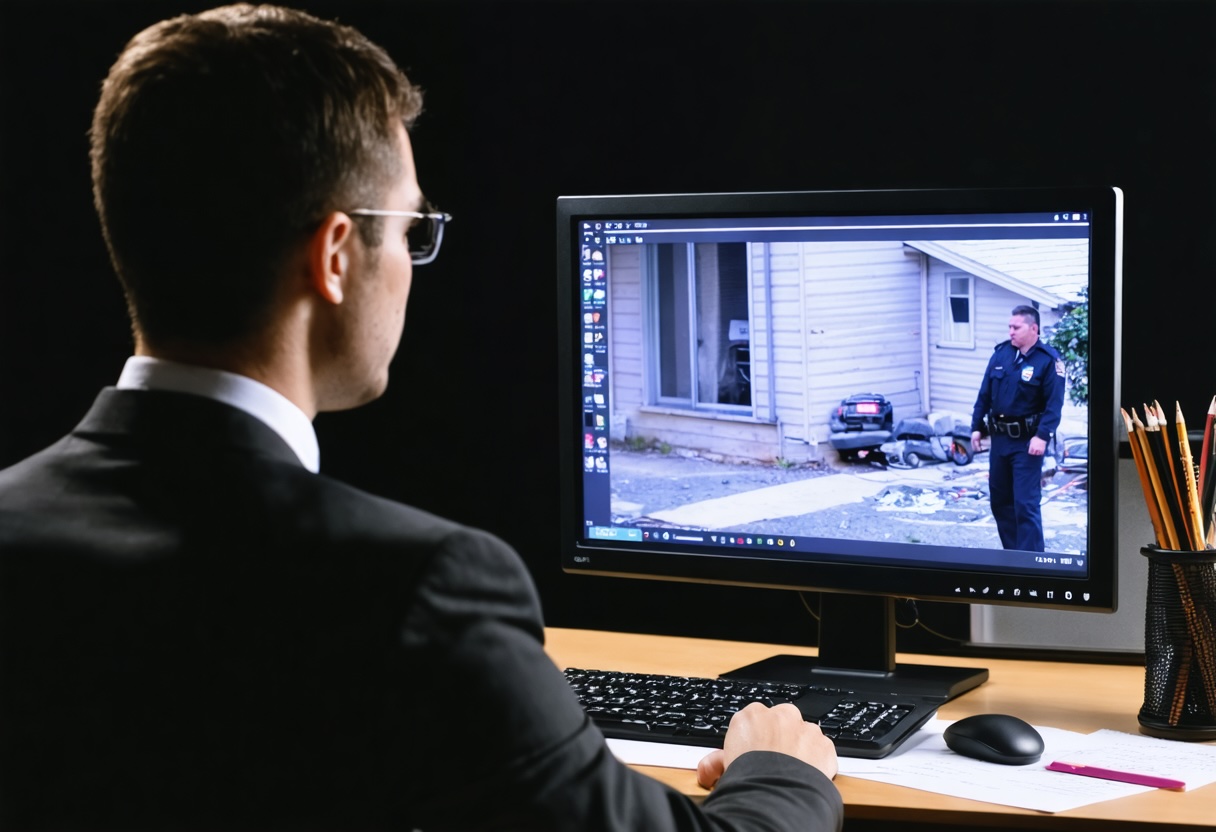
Police routinely depart from best practices—such as double-blind photo lineups—when conducting internal comparisons. Officers will often view a single suspect image and compare it to seized CCTV footage. The law has also permitted judges, as triers of fact, to conduct their own visual comparisons under authorities such as R v Nikolovski: a judge may look at the accused in the courtroom and compare their features to a suspect depicted in sometimes grainy surveillance video.
These comparisons are ordinarily insulated from meaningful appellate review because they are treated as findings of fact, entitled to substantial deference.
This case represents a welcome recalibration. The Court of Appeal recognized the “high risk of unconscious cognitive bias” inherent in comparing a clear arrest video to low-quality CCTV of a crime in progress. The dangers are not limited to civilian witnesses; they apply equally to police officers, judges, and juries. Familiarity with the accused, knowledge of the investigative narrative, and exposure to clearer images can all unconsciously shape perception.
The decision invites a broader rethinking of identification jurisprudence in an era saturated with video evidence. The traditional safeguards developed for civilian eyewitnesses may not be sufficient when identification rests on courtroom comparison exercises. If the justice system is to remain fair in the face of ever-expanding digital evidence, courts may need to reconsider not only the admissibility of eyewitness testimony, but also the permissibility and limits of visual comparison reasoning itself.
Introduction
[1] The appellant, Gerald Benn, was convicted of two counts of second-degree murder contrary to s 235(1) of the Criminal Code, RSC 1985, c C-46. The appellant appeals his convictions, arguing the circumstantial evidence does not support a guilty verdict and the trial judge erred by shifting the burden to the appellant.
[2] For the following reasons, the appeal is allowed. An acquittal is entered on both counts.
Grounds of Appeal
[32] The appellant argues that the trial judge erred in finding that the only reasonable conclusion from the circumstantial evidence was that the appellant was the shooter. Further, he submits that the onus of proof was erroneously shifted to him when the trial judge relied on an absence of evidence undermining identification to convict.
Analysis
[38] The trial judge concluded the appellant was the shooter based on his interpretation of two categories of evidence presented by the Crown: first, forensic fingerprint and DNA evidence collected from the scene and second, video evidence of the crime itself taken in real time and of the accused as he appeared on the date he was arrested. He accepted that neither the forensic evidence nor the video comparison evidence on its own would have been sufficient to prove identity of the shooter beyond a reasonable doubt; however, any reasonable doubt he may have had was extinguished when he considered that evidence in combination. Put another way, the trial judge found that there was no reasonable likelihood that an unidentified person resembling the accused could have been the shooter, given the fact that the accused’s fingerprints and DNA were found at the scene of the crime.
[39] We disagree. Properly considered, the totality of the evidence at trial should have left the trial judge with a reasonable doubt that the appellant was the shooter. Like the unreasonable verdict reached in Spencer, the trial judge’s analysis of the circumstantial video and forensic evidence contained serious flaws which led him to reach an unreasonable verdict: Spencer at paras 51–56.
Video Evidence
[40] The trial judge acknowledged that the CCTV footage was pixelated and of insufficient quality to allow for definitive identification in itself. Nevertheless, upon closely comparing it with the higher-quality body-worn camera footage, the trial judge assigned weight to the similarities between the two. There are significant dangers associated with this line of reasoning.
[41] The video of the footage is of such low quality the trial judge found that it cannot, on its own, provide a basis for definitive identification of the shooter. No one disputes this conclusion, and this fact distinguishes this case from similar cases where the video evidence was of sufficient quality to permit independent verification by the trial judge: see Harrison at para 23; Osman at para 24; R v Wanihadie, 2021 ABCA 173 at para 30. The only high-quality video footage the trial judge had before him was video of the arrest of the appellant, who was a known suspect. The trial judge was not provided with any other high-quality alternative video or photographs of any other person for comparison purposes.
[42] The analysis performed by the trial judge carried a high risk of unconscious cognitive bias; specifically, the risk that having seen the high-quality image of the appellant’s arrest, the trial judge would view the low-quality footage of the shooter looking for confirmation that the police had arrested the right person, thereby unconsciously minimizing the possibility that there could be, and probably are, many other people who look similar to both the appellant and the shooter.[Emphasis by PJM]
[43] The trial judge acknowledged the dangers of eyewitness identification generally, the application of these principles to the examination of video evidence, and the risk of a viewer becoming more certain over time, citing Nikolovski; R v Mohamed, 2014 ABCA 398; R v Atfield, 1983 ABCA 44, (1983) 42 AR 294 at para 3. He also reasoned that “video evidence that did not easily permit facial identification of a perpetrator” nonetheless is “probative of identity”, relying on R v Brown, [1999] OJ No 4865 (SC) [Brown ONSC], aff’d R v Brown, 2006 CanLII 42683 (ON CA), 215 CCC (3d) 330 [Brown ONCA]
[44] The trial judge’s self-instruction on these points addressed some general concerns associated with eyewitness and video identification evidence but did not advert to the specific and somewhat unique danger raised by the evidence in this case: the risk that a trier of fact viewing poor quality video images of an unidentified perpetrator and comparing it to high-quality video image of the prime suspect would unconsciously expect to see significant similarities between the two.
[46] The additional cases referred to by the trial judge, Mohamed, Brown ONSC and Brown ONCA share somewhat similar facts, but again, they do not deal with the specific risk associated with the identification process the trial judge followed in this case. Courts must be mindful of “how flawed identification procedures can contribute to miscarriages of justice”: R v Hanemaayer, 2008 ONCA 580 at para 29. The after-the-fact comparative identification analysis that occurred here carried a specific risk of cognitive bias that the trial judge did not accurately acknowledge. The caselaw is replete with warnings about the danger of wrongful conviction arising from apparently persuasive identification evidence and recognizes that there is a risk triers of fact will find identification evidence to be highly persuasive even where other evidence suggests unreliability.
[47] In this case, the trial judge concluded that there were only similarities, and no “dissimilarities” between the people in the videos. This phrasing is tautological and does nothing to strengthen the trial judge’s overall analysis where, as here, the similarities noted are generic and therefore of limited probative value. The trial judge found that both men were of a similar height, weight, skin tone, hair colour, hair shape and style, face shape, and body proportions. At the time of his arrest, the appellant was a 5’9” man weighing 180 pounds with a medium brown skin tone and short, dark hair. These are traits that many individuals possess. The additional description of an angular face shape, broad shoulders, a narrower waist, a curve across the upper back, and a similar hairline are equally indistinct. In the absence of any expert evidence about the statistical commonality of these seemingly quite ordinary traits, we have difficulty seeing the evidential basis for the trial judge’s conclusion that it was unique for the appellant and the shooter to possess all of them.[Emphasis by PJM]
[48] In assessing eyewitness evidence, courts have repeatedly cautioned that “generic description[s] that could fit possibly thousands of individuals” are of minimal evidentiary value and should be afforded little weight: R v Ismail, 2021 ONSC 4426 at para 13; R v Foster, 2008 CanLII 8419 at para 40 (ONSC); R v Ellis, 2008 ONCA 77 at paras 5–8; R v Keddy, 2022 ONCJ 434 at para 45; R v FA, 2004 CanLII 10491 (ONCA) at para 64, 183 CCC (3d) 518; R v Gonsalves, 2008 CanLII 17559 (ONSC) at para 39. What a person considers unique in facial and other physical features is highly subjective, and therefore, may be influenced by their racial perspective, among other things: see for example R v Mathias, 2018 ONSC 221. The need for extreme caution in assessing generic eyewitness identification applies with equal force to the video identification exercise undertaken by the trial judge here.[Emphasis by PJM]
[49] Further, as the trial judge noted, the lens on the CCTV camera distorted the size of objects, making it difficult to precisely discern the height or weight of the shooter and no expert testimony was entered with respect to the likely height and weight of the shooter in the CCTV footage. Combining the potential inaccuracies from a layperson estimating height and weight from distorted video footage with the highly generic nature of the observed similarities, the finding of physical similarity, or of the absence of dissimilarity, provided little to no appropriate support for the ultimate conclusion on identity.
Forensic and Other Evidence
[50] The parties agree that the shooter was the last person to touch the Walmart bag. This is relevant considering an unidentified fingerprint overlaps one of the appellant’s fingerprints and was likely placed on top, some time after the appellant’s fingerprint was placed. While it is possible this is the appellant’s fingerprint, the presence of 23 other fingerprints on the same bag, belonging to people other than the appellant, means that cannot be viewed as the only possibility. If the overlapping fingerprint is not the appellant’s fingerprint, and assuming continuity of evidence with respect to the bag, this evidence alone should have raised a reasonable doubt about the identity of the shooter.
[51] More specifically, this evidence points to a reasonable alternative explanation for how the appellant’s DNA and fingerprints appeared on the bags: the appellant picked them up at some point in time, and then someone else, or several other people, touched them, and they eventually made their way into the boot of the car, where the shooter found them and used them.
[52] There were several other pieces of evidence which properly considered in the context of the Crown’s case as a whole should have raised at least a reasonable doubt as to the identity of the shooter. Specifically:
- The appellant’s fingerprints were found only on the plastic bags, and his DNA was found on only one of those bags. There was no evidence as to when the DNA or fingerprints were left on the bags so as to suggest any proximity of fingerprint and DNA transfer to the time of the shooting: see R v Metzger, 2023 SCC 5 at para 3 (majority reasons) and paras 14– 15 (dissenting reasons).
- Despite lack of evidence on this point, the trial judge inferred that the DNA on the Wendy’s bag originated from the appellant’s bodily fluids being directly deposited onto the bag at the time of the shooting. In fact, the expert testified that she could not tell when or how it was deposited, and agreed it could have been deposited there indirectly, through transfer from another object.
- The numerous other fingerprints located on the Walmart bag could have been deposited by unidentified individuals, one of whom could have been the shooter.
- The appellant’s fingerprints, despite being located on a plastic bag at the scene, were not found anywhere else; more specifically, none of the fingerprints collected from the Infiniti matched the appellant, despite the video showing the shooter touching the vehicle with his bare hands.
- The Crown did not provide any evidence that the appellant was associated with or even known to the victims or Wong; and Wong’s girlfriend, who was living with him around the time of the shootings, testified that she had never heard of the appellant.
[53] In combination, this evidence raises at least the possibility of innocent coincidence: that there is a reasonable alternate explanation for how the appellant’s fingerprints and DNA appeared on the plastic bags, and the shooter was a different person who looked similar to the appellant. In this circumstantial case, the evidence did not reasonably support the conclusion that the accused’s guilt was the only reasonable conclusion available on the totality of the evidence.
Conclusion
[55] The appellant’s guilt is not the only reasonable possibility when viewing the totality of the evidence and therefore that evidence is not sufficient to establish the appellant’s guilt beyond a reasonable doubt.
[56] The appeal is allowed. As conviction cannot be supported by this evidence, we quash the convictions for both counts of second degree murder under s 235(1) of the Criminal Code and enter acquittals on both counts: Spencer at 57.
R v Kipusi, 2026 ONCA 86
[February 10, 2026] Charter s.7: Disclosure, Full Answer and Defence and NCR Reports [Reasons by R. Pomerance J.A. with P. Lauwers and L. Sossin JJ.A. concurring]
AUTHOR’S NOTE: This decision provides a comprehensive overview of the limits on using NCR assessment reports in the prosecution of an accused. Statements made during an NCR evaluation are expressly protected under s. 672.21 of the Criminal Code and are therefore presumptively inadmissible at trial.
That protected status operates at two levels:
1. Admissibility – The Crown must seek admission through a voir dire. The statement is not automatically available for use.
2. Use – Even if admitted, the statement may be used only for the limited purpose of challenging the credibility of the accused. It cannot be used to advance the Crown’s case on the merits.
A further error arose when the Crown attempted to split its case, calling the psychiatrist who conducted the NCR assessment while the accused was still on the stand. This was impermissible. Before extrinsic evidence of a prior inconsistent statement can be led, the witness—whether the accused or anyone else—must first be confronted with the statement and given a fair opportunity to explain or adopt it. The Crown cannot bypass that step by immediately calling the recipient of the statement to suggest inconsistency.
The decision underscores two key principles: the robust statutory protection surrounding NCR communications, and the continued vitality of basic procedural fairness in the use of prior statements at trial.
A further issue discussed is the timing of the voir dire and the right to disclosure of the NCR report. An accused is entitled to know the case to meet. Thus, where the Crown intends to use an NCR report for impeachment, they must at the very least advise the defence of the possibility of a voir dire in advance of the accused taking the stand to comply with the right to full answer and defence. In these circumstances, the accused would also be entitled to a copy of any records to be used for such an impeachment.
I. OVERVIEW
[1] The appellant, Kishoyian Kipusi was convicted of four counts of criminal harassment and one count of breach of release conditions and received a conditional sentence of 5 months followed by 15 months of probation. He appeals his convictions…
[2] Dr. Julian Gojer, a forensic psychiatrist, conducted a court ordered assessment of the appellant on the question of whether he was not criminally responsible by reason of mental disorder (“NCR”). Dr. Gojer concluded that there was not sufficient evidence to ground an NCR defence.
[3] During the assessment process, the appellant made various statements to Dr. Gojer. The Crown sought to introduce those statements at the appellant’s trial. Unfortunately, no one adverted to the fact that these were “protected statements” for purposes of s. 672.21 of the Criminal Code, R.S.C. 1985, c. C-46, and were presumptively inadmissible, subject to certain exceptions.
[4] The proceedings gave rise to unfairness in three respects:
- There was no voir dire to determine admissibility of the protected statements and, if admissible, the limited use to which they could be put;
- The Crown called Dr. Gojer to testify about the appellant’s statements before putting the statements to the appellant in cross-examination, thereby failing to comply with ss. 10 and 11 of the Canada Evidence Act, R.S.C. 1985, c. C-5 (the “CEA”);
- The Crown failed to advise the defence that it would be seeking to introduce the protected statements. In the result, the appellant did not know the full extent of the case he had to meet when he made the decision to testify at his trial
[5] In the result, the verdicts cannot stand, and a new trial must be ordered.
II. BACKGROUND
b. The Appellant Retains New Counsel
[8]…The appellant retained new counsel to represent him at the trial. That lawyer was not aware of Dr. Gojer’s report. The Crown did not disclose this report to counsel. Nor did the Crown advise that it would seek to cross-examine the appellant on statements contained in the Gojer Report if he took the stand to testify.
c. Counsel Requests a Mistrial
[10]…The Crown’s stated reason for doing so at that time is not entirely clear on the record before this court. Counsel for the appellant sought a mistrial on the basis that Dr. Gojer’s report had not been disclosed…
d. The Mistrial is Denied
[11] The trial judge rejected the request for a mistrial, finding that the appellant would have been aware that he spoke to Dr. Gojer, and that the report did not fall within the scope of the Crown’s disclosure obligation…
e. Dr. Gojer Testifies
[12] The mistrial having been denied, the Crown called Dr. Gojer to testify as an expert in forensic psychiatry. The Crown asked Dr. Gojer to opine on whether the appellant was NCR. The Crown then elicited evidence of statements the appellant made to Dr. Gojer. After Dr. Gojer testified, the Crown’s cross-examination of the appellant resumed.
f. Reasons for Judgment
[13] The trial judge rejected the appellant’s testimony, citing, as part of her analysis, the inconsistencies between the appellant’s trial testimony and the statements he made to Dr. Gojer…
IV. ANALYSIS
a. Leading Protected Statements Without a Voir Dire
[15] The statements made by the appellant to Dr. Gojer were “protected statements”, pursuant to s. 672.21 of the Code. That section provides as follows:
672.21 (1) In this section, protected statement means a statement made by the accused during the course and for the purposes of an assessment or treatment directed by a disposition, to the person specified in the assessment order or the disposition, or to anyone acting under that person’s direction.
(2) No protected statement or reference to a protected statement made by an accused is admissible in evidence, without the consent of the accused, in any proceeding before a court, tribunal, body or person with jurisdiction to compel the production of evidence.
(3) Notwithstanding subsection (2), evidence of a protected statementis admissible for the purpose of
(a) determining whether the accused is unfit to stand trial;
(b) making a disposition or placement decision respecting the accused;
(c) determining, under section 672.84, whether to refer to the court for review a finding that an accused is a high-risk accused or whether to revoke such a finding;
(d) determining whether the balance of the mind of the accused was disturbed at the time of commission of the alleged offence, where the accused is a female person charged with an offence arising out of the death of her newly-born child;
(e) determining whether the accused was, at the time of the commission of an alleged offence, suffering from automatism or a mental disorder so as to be exempt from criminal responsibility by virtue of subsection 16(1), if the accused puts his or her mental capacity for criminal intent into issue, or if the prosecutor raises the issue after verdict;
(f) challenging the credibility of an accused in any proceeding where the testimony of the accused is inconsistent in a material particular with a protected statement that the accused made previously; or
(g) establishing the perjury of an accused who is charged with perjury in respect of a statement made in any proceeding.
[16] These were statements “made during the course and for the purposes of an assessment or treatment directed by a disposition”. In the ordinary course, such statements are not admissible as evidence against an accused person, though there are some exceptions. Among them is that stated in s. 672.21(3)(f), which permits introduction of statements for the purpose of “challenging the credibility of an accused in any proceeding where the testimony of the accused is inconsistent in a material particular with a protected statement that the accused made previously”: R. v. G. (B.), [1999] 2 S.C.R. 475, at para. 72.[Emphasis by PJM]
[17] When this exception applies, the protected statements may only be used for impeachment purposes. They cannot be used to prove guilt. Unlike other statements of an accused person, which are admissible for their truth, s. 672.21(3)(f) provides protected statements are exclusively admissible to demonstrate inconsistency and thereby challenge the credibility of the trial testimony
[18] As with all presumptively inadmissible evidence, the admissibility of the protected statements in this case should have been the subject of a voir dire: see generally R. v. Sadikov, 2014 ONCA 72, 305 C.C.C. (3d) 421, at paras. 30-31. There was no such voir dire in this case. Instead, the Crown was permitted to lead Dr. Gojer’s evidence without any discussion of the limitations on what the witness could say, or how the evidence could be used. Dr. Gojer was qualified as an expert …[Emphasis by PJM]
[19] In the absence of a proper voir dire, the trial judge did not assess whether the appellant’s statements to Dr. Gojer qualified for the statutory exception, which required that the statements be inconsistent with his trial testimony “in a material particular”. Furthermore, while the trial judge appeared to use the Gojer statements for impeachment purposes – she cited apparent inconsistencies between those statements and the appellant’s trial testimony – there was no express acknowledgement that the statements were not admissible for their truth and could not be used as a “make-weight” to buttress the case for the prosecution.
b. Failure to Comply with Section 11 of the CEA
[20] The appellant’s trial unfolded in an unorthodox fashion. The appellant testified in chief. During cross-examination, the Crown interrupted the defence case and called Dr. Gojer to testify. The purpose for calling Dr. Gojer remained unclear.
[23] It may be that the Crown was attempting to prove inconsistent statements that the Crown intended to use in cross-examination. Yet, if the statements were to be used for impeachment purposes, it was incumbent upon the Crown to first put those statements to the appellant so that he could: (a) testify about whether he made those statements; and (b) offer an explanation for any apparent inconsistencies.
[24] The trail judge’s approach ran afoul of s. 11 of the CEA, which provides:
11 Where a witness, on cross-examination as to a former statement made by him relative to the subject-matter of the case and inconsistent with his present testimony, does not distinctly admit that he did make the statement, proof may be given that he did in fact make it, but before that proof can be given the circumstances of the supposed statement, sufficient to designate the particular occasion, shall be mentioned to the witness, and he shall be asked whether or not he did make the statement.
[25] Section 10 of the same Act provides:
10 (1) On any trial a witness may be cross-examined as to previous statements that the witness made in writing, or that have been reduced to writing, or recorded on audio tape or video tape or otherwise, relative to the subject-matter of the case, without the writing being shown to the witness or the witness being given the opportunity to listen to the audio tape or view the video tape or otherwise take cognizance of the statements, but, if it is intended to contradict the witness, the witness’ attention must, before the contradictory proof can be given, be called to those parts of the statement that are to be used for the purpose of so contradicting the witness, and the judge, at any time during the trial, may require the production of the writing or tape or other medium for inspection, and thereupon make such use of it for the purposes of the trial as the judge thinks fit.
[26] Sections 10 and 11 set, as a precondition to admission of extrinsic evidence of either an oral or written statement, the requirement that the cross-examiner give the witness notice of the statement. This provides the witness with the opportunity to explain or elaborate on the statement either in cross-examination or reexamination.
[29] By calling Dr. Gojer first, and conducting the cross-examination of the appellant second, the Crown in this case put the cart before the horse. Dr. Gojer’s evidence was admissible to prove the statements, in the event that the appellant did not acknowledge making them. If, however, the appellant acknowledged making the statements, as he ultimately did in cross-examination, the evidence proving the statements would have been unnecessary.
c. Failing to Grant a Remedy for Non-Disclosure
[31] The Crown did not disclose Dr. Gojer’s report to the defence. As the trial judge observed, this was not a typical disclosure problem. In denying a mistrial, the trial judge found that the report did not fall within the scope of conventional disclosure obligations and, further, that the appellant was well aware that he had spoken to Dr. Gojer for purposes of an NCR assessment. On this basis, the trial judge held that the appellant could not have been surprised by the introduction of Dr. Gojer’s evidence at the trial. The report was filed as an exhibit in the trial record.
[32] With respect, the reasoning on the mistrial application misses the point. The issue was not whether the appellant knew that he had participated in the assessment. He was clearly aware of that. The question is whether the appellant knew that the Crown was going to use the statements made to Dr. Gojer to impeach the appellant’s credibility. This was part of the case that the appellant had to meet. The appellant was entitled to know that the Crown would use the Gojer statements when he made the critical decision whether or not to testify at his trial.[Emphasis by PJM]
[33] In other words, the issue is not disclosure of the report per se. The issue is disclosure of the Crown’s intention to use the report to contradict the appellant’s version of events should he testify, given that the appellant did not advance an NCR defence and the Gojer Report consisted of protected statements.
[34]…In order for a decision to testify to be informed, the accused must understand the case that he or she has to meet. That includes disclosure of evidence that might be used for impeachment purposes.[Emphasis by PJM]
[35] For example, before making a decision to testify, an accused person is entitled to know whether his or her criminal record will be introduced under s. 12 of the CEA, or whether the trial judge will exercise a discretion to exclude all or some of the accused’s prior convictions. In R. v. Underwood, [1998] 1 S.C.R. 77, the Supreme Court stressed the importance of the accused having this information before deciding to testify. As summarized in the recent case of R. v. Hussein, 2026 SCC 2, at para. 50:
In R. v. Underwood, [1998] 1 S.C.R. 77, this Court held that an accused is entitled to a ruling on their Corbett application at the close of the Crown’s case, before they decide whether to testify (para. 7). The extent to which an accused’s criminal record is admissible encompasses part of the case to be met by the accused. Knowledge of the case to be met is a principle of fundamental justice protected by s. 7 of the Charter (para. 6).
[37] In a similar vein, an accused is entitled to know what, if any, bad character evidence might be in the possession of the Crown before deciding to testify. Where the Crown is in possession of bad character evidence, fairness dictates that the accused be aware that such evidence might be tendered if he or she puts character in issue: R. v. Hutter (1993), 16 O.R. (3d) 145 (C.A.), at pp. 153-54.
[38] In these instances, the question is not whether the accused knows, in the abstract, that the evidence exists. In the criminal record context, the accused likely knows what his or her prior convictions are. Similarly, the accused may be conscious of his or her prior acts of bad character. The pertinent question is whether the accused is aware of the risk that the evidence will be introduced against him or her at his or her trial.[Emphasis by PJM]
[39] So too here, the question on the mistrial application was not whether the appellant was aware of the statements that he made to Dr. Gojer. He knew that he made certain statements to Dr. Gojer. The question was whether the appellant was aware that the Crown might introduce the statements he made to Dr. Gojer in an attack on the appellant’s credibility. The need for such disclosure was important here, given that Dr. Gojer’s report related to an issue that was not raised at the trial. The appellant did not advance an NCR defence, and therefore had no reason to expect that the Crown would lead evidence that he was not NCR. The subject matter of Dr. Gojer’s report was not, on its face, relevant to the material issues at trial.[Emphasis by PJM]
[42] Thus, contrary to the trial judge’s finding, the failure to disclose the Crown’s intended use of the Gojer Report did have the potential to adversely impact on the fairness of the trial. By the time the Crown sought to introduce Dr. Gojer’s testimony, the appellant had already testified in-chief, a decision that could not be undone.
DISPOSITION
[45] For these reasons, I would allow the appeal, quash the appellant’s convictions and order a new trial.